
Last updated August 27, 2026
Free in-home measure and quote - PGT, CGI and CWS impact lines compared on your actual openings, style by style
Sliding glass doors

Impact garage doorsPGTCGI
 Before
 After
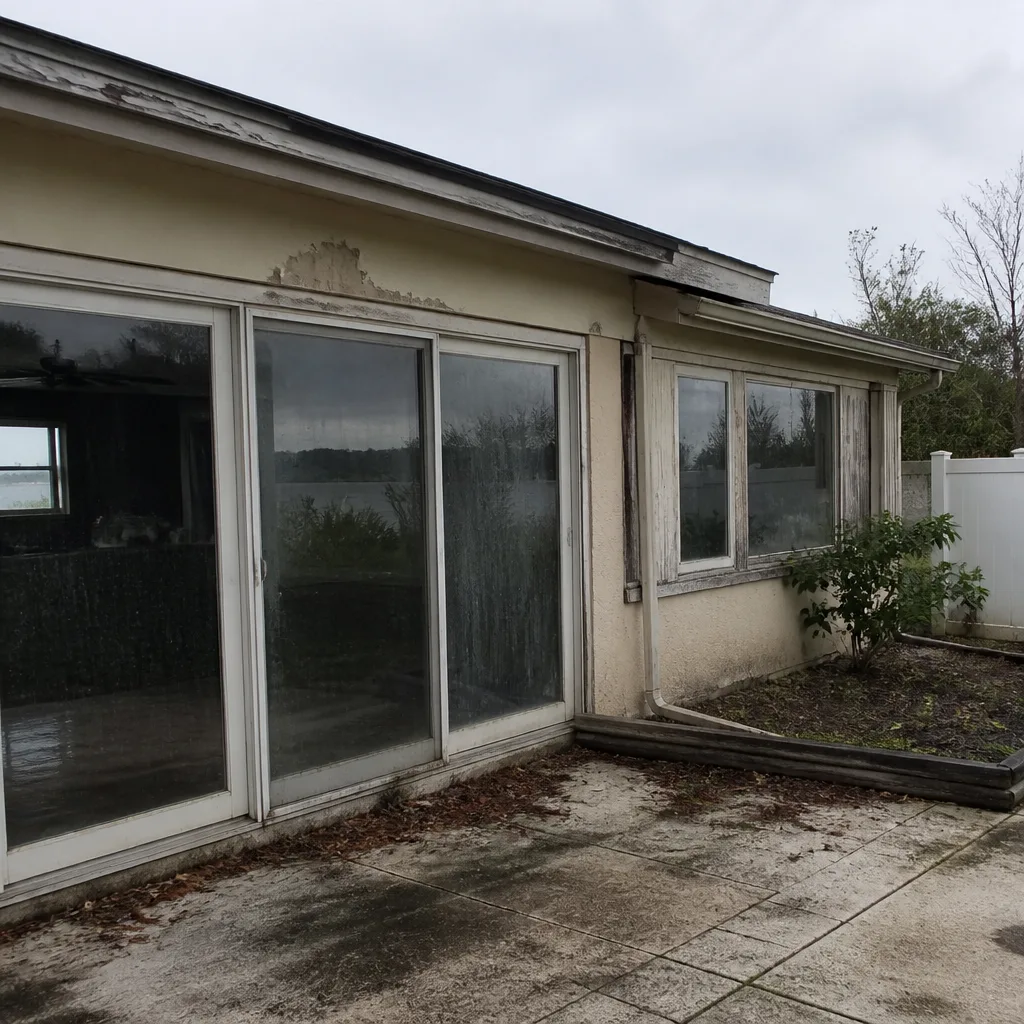 Before
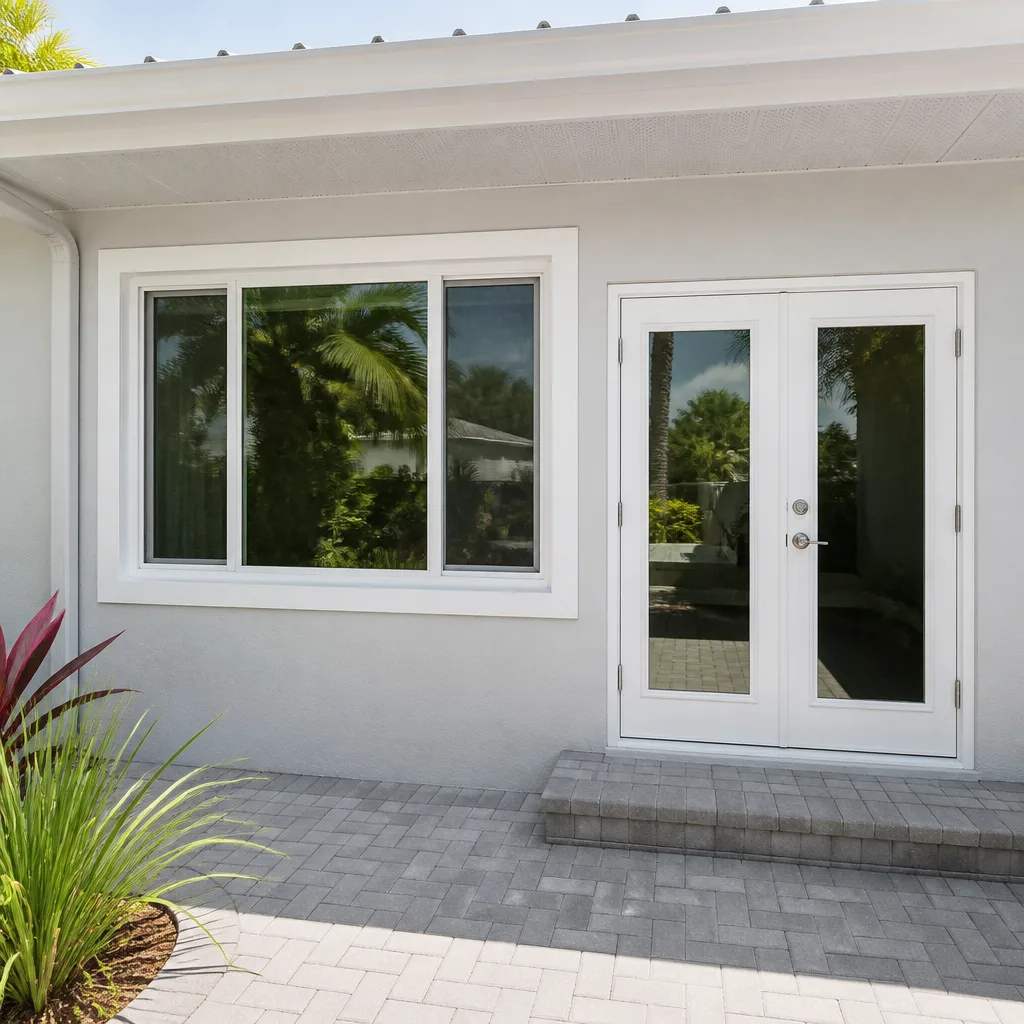 After
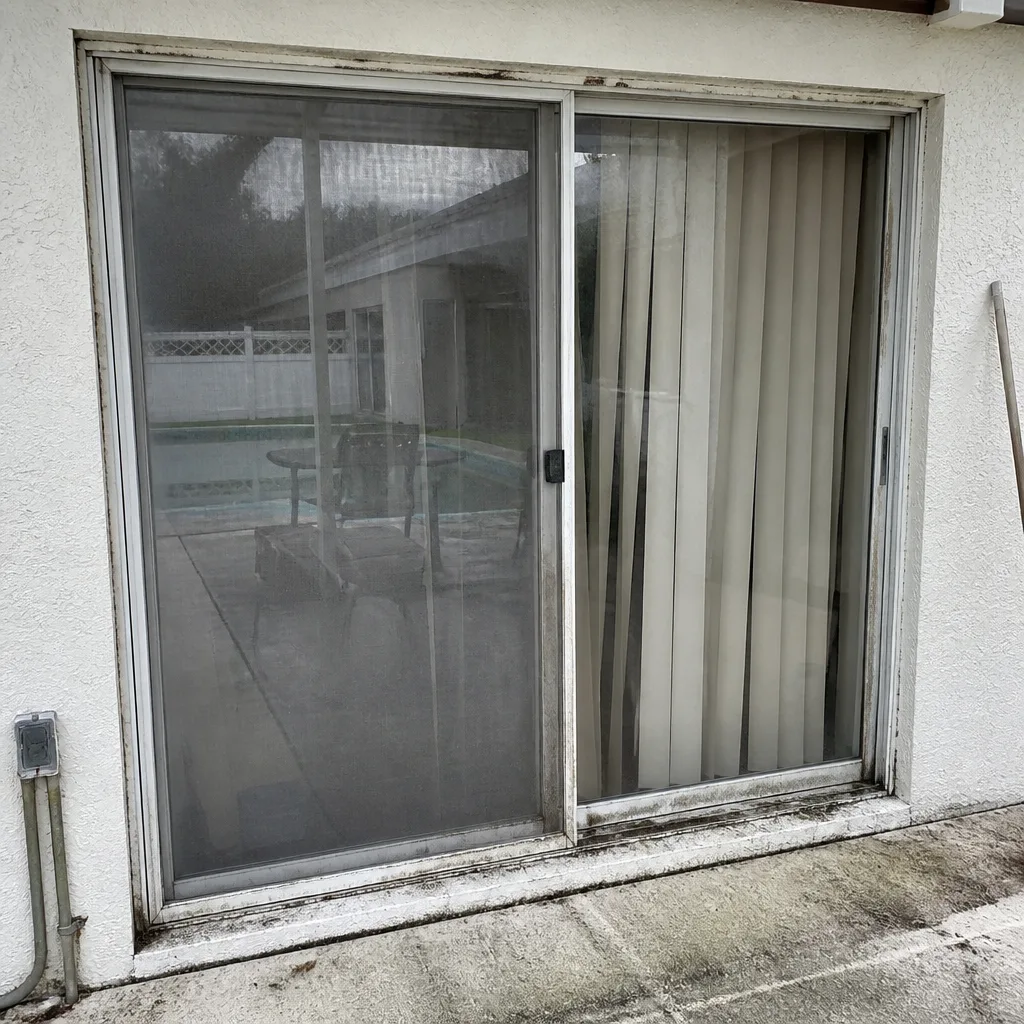 Before
 After
Seasonal Windows & Doors Care for Stuart: Year-Round Homeowner’s Guide
Most Stuart homeowners assume their windows and doors fail all at once, but that’s not how it works here. What actually happens is slower: salt air works on the frames, the summer humidity swells the wood, and the afternoon storms push water into gaps you didn’t know were there. By the time you feel the draft or see the fog between the panes, the damage has been building for months. This guide walks through what to check every season, what you can handle yourself, and what should get a second look before a small problem becomes a full replacement. We’ve put this together from years of working on homes in Stuart, and it’s written the way we’d explain it standing in your driveway.
Quick Answer
Windows and doors in Stuart need attention four times a year: check seals and caulking in spring before the rains, lubricate and clean tracks in summer when humidity causes sticking, replace weatherstripping and inspect for storm damage in fall before hurricane season ends, and re-check for frame shifting and condensation in winter. The most important habit is catching salt corrosion and seal failure early, because both problems are cheap to fix when small and expensive to ignore once the glass or frame starts to go.
Table of Contents
- Why Stuart’s Climate Is Harder on Windows & Doors Than Most Homeowners Realize
- Spring Care: Post-Storm Inspection, Salt Removal, and Track Cleaning
- Summer Care: Humidity, Sticking Doors, and UV Damage Control
- Fall Care: Weatherstripping, Hurricane Season Readiness, and Impact Window Checkups
- Winter Care: Condensation, Frame Shifting, and Energy Efficiency
- The Seal Question: When Fogged Glass Means Replacement, Not Repair
- Common Mistakes to Avoid
- When to Call a Professional
- Frequently Asked Questions
- The Bottom Line
Why Stuart’s Climate Is Harder on Windows & Doors Than Most Homeowners Realize
Stuart sits in a unique spot on the Treasure Coast. We get the salt air off the Atlantic, the humidity of South Florida, and enough afternoon thunderstorms to keep every caulk joint working. That combination means window frames and door jambs here get hit three ways at once: corrosion, moisture expansion, and UV breakdown.
Salt is the quiet killer. It settles into aluminum tracks, eats at exposed fasteners, and works its way under paint on wood frames. You won’t always see it at first, but you’ll hear it: a grinding sound when you slide a window open. That’s salt grit embedded in the track, and it’s acting like sandpaper on the rollers. Left alone for a year or two, the roller wheels flatten and the window starts to drag. In the neighborhoods closer to the water, like Sewall’s Point and Rocky Point, we see this happen faster than in inland communities like Palm City. The salt concentration in the air isn’t uniform; it drops off with distance from the ocean, but not enough to ignore anywhere in Martin County.
Then there’s the humidity. Stuart’s average relative humidity runs above 70 percent for most of the year. Wood frames and doors absorb that moisture, swell slightly, and then dry out during the winter’s lower-humidity stretch. That cycle of expansion and contraction works on every joint, every miter, and every paint seal on your home’s envelope. A door that fits fine in December can bind against the jamb in August, not because the house shifted, but because the door itself got bigger.
Finally, there’s the UV exposure. The sun here is intense, and it doesn’t just fade furniture. It degrades vinyl over time, making it brittle. It breaks down the sealants around the glass. And it accelerates the failure of the insulating gas between double-pane windows. We’ve replaced units in Stuart homes where the spacer bar showed UV degradation after only eight or ten years, while the same window in a northeastern climate would have lasted twice that long.
What This Means for a Stuart Homeowner
You can’t change the climate, but you can change how often you look at your windows and doors. The old advice to inspect once a year doesn’t cut it in this environment. Seasonally, four times a year, is what keeps small problems from turning into full replacements. Here’s the good news: most of what you’ll check takes ten minutes, and most of what you’ll catch can be fixed with a tube of caulk, a little silicone lubricant, or a replacement weatherstrip. The point isn’t to become a window technician. It’s to know what’s normal wear and what’s a sign that something bigger is happening behind the trim.
At TruePane Windows & Doors home, we’ve kept our service area focused on Stuart and the surrounding communities because we want to know the exact conditions our installs are facing. A window that performs well in Minnesota doesn’t tell us anything about one that has to survive a August squall line off Hutchinson Island. We’d rather know the local conditions cold, and that means working here year-round, not flying in for a sales push.
Spring Care: Post-Storm Inspection, Salt Removal, and Track Cleaning
Spring in Stuart means the winter fronts have passed and the rainy season is still a month or two out. It’s the best time of year to catch damage from the previous summer and fall, because the weather is mild enough that you can actually stand in front of a window with the door open and inspect it without sweating through your shirt.
Start with the obvious: after the winter wind events, check every window and door for cracks in the glass, chips in the frame, and gaps where the caulk has pulled away. Walk around the house with a pad of paper and write down everything you see. A chip smaller than a dime might seem cosmetic, but if it’s in a load-bearing corner of the glass, it can spread the first time a storm pressure-differential hits it. We’ve been called out to Stuart homes after hurricanes where a small pre-existing chip turned into a full crack once the wind pressed against it.
Spring Maintenance Checklist
- Inspect all caulk lines around window frames and door jambs. Look for shrinkage cracks, gaps at the corners, or areas where the caulk has turned chalky and begun to peel. In Stuart’s salt air, caulk degrades from the outside in, so run your finger along the seam; if it crumbles, it’s done.
- Wash the exterior glass and frames with a mild soap and fresh water. Salt deposits build up during the winter months, especially on east-facing windows that catch the prevailing breeze off the Atlantic. The salt itself doesn’t damage glass, but it holds moisture against the frame, and moisture is what starts corrosion.
- Clean the tracks on every sliding window and patio door. Use a vacuum with a brush attachment first, then a damp cloth. If you see white crusty buildup, that’s salt and mineral deposit; it needs to be scrubbed out, not just wiped over. A plastic scraper helps with the stubborn spots without scratching the aluminum.
- Lubricate the rollers and hinges. Use a silicone spray, not WD-40. WD-40 is a penetrant and will actually wash away the grease that’s supposed to be in the roller bearings. One short spray on each roller, then work the window back and forth a few times to spread it.
- Test the locks and latches. Every window and every door. If a lock is stiff, it’s either corroded or the sash has shifted. Corrosion you can clean with a wire brush and a little oil. Shifted sash means the frame is moving, and that’s worth a closer look.
One more spring task that gets skipped: check the weep holes at the bottom of your window frames. These are small drainage slits that let water out when rain blows against the glass. In Stuart, they clog with pollen, dirt, and sometimes mud from the storms. A clogged weep hole means water sits in the track after every rain, and that standing water breeds corrosion and, eventually, leaks into the wall cavity. A straightened paperclip works to clear them, or a small blast from a compressed air can. If the water in the track never drains even after you clear the holes, the window may have been installed out of level, and that’s a repair call, not a maintenance job.
Summer Care: Humidity, Sticking Doors, and UV Damage Control
Summer in Florida is when windows and doors start misbehaving, and most of it comes down to one thing: moisture. The air itself is heavy, the wood swells, and everything that was loose in March is now tight in August.
The most common summer complaint we hear in Stuart is a door that won’t close cleanly. The top corner sticks, or the latch no longer lines up with the strike plate. Homeowners assume the house settled, but nine times out of ten, it’s the door itself that’s changed size. Wood doors absorb moisture from the air and grow measurable fractions of an inch over the course of a humid summer. The same door that swung freely in January is now binding in July. When we measure them, we typically see quarter-inch differences in width between wet-season and dry-season dimensions.
There’s no permanent fix for wood movement; it’s just what wood does in this climate. But there are things you can do to manage it. First, check that the hinges are tight. A loose hinge exaggerates the swelling problem because it lets the door sag slightly even before the moisture gets to work. Second, consider adjusting the strike plate in the summer months rather than planing the door. Planing a wood door to fit in August means you’ll have a gap in December when the door shrinks back. A small adjustment of the strike plate solves the sticky latch without changing the door’s dimensions permanently.
Managing Humidity Inside the House
The humidity outside affects your windows and doors, but the humidity inside matters just as much. Stuart homes run air conditioning most of the year, which pulls moisture out of the indoor air. That’s good for comfort, but it creates a steep humidity gradient across every window and door: humid outside, dry inside. That gradient causes condensation on the glass during the summer, usually on the outside surface. Homeowners sometimes think outside condensation means the window is failing, but it actually means the opposite. Outside condensation in humid weather means the glass is doing its job; it’s keeping the indoor cool from reaching the outer pane, and the humid outdoor air is condensing on the cool surface it finds there. It’s the same thing as condensation on a cold drink glass, and it’s not a defect.
Inside condensation is a different story. If you see moisture on the inside of a double-pane window in Stuart, it means the seal between the two panes has failed and the insulating gas has escaped. We’ll get into that in the section on seals below, but the short version is this: inside condensation in summer is never normal for a properly functioning double-pane unit.
UV Protection for Windows and Frames
The summer sun in Stuart is relentless. South-facing windows take the worst of it, and over time, the UV breaks down vinyl framing material. You’ll notice it first as a chalky residue when you wipe the frame, or a slight yellowing in white vinyl. That’s the plasticizers coming out of the material, and it’s a sign the vinyl has already started to degrade from the outside in.
There’s no way to reverse UV damage to vinyl. You can slow it down by keeping the frames clean and by using window coverings on the south side of the house during peak sun hours. Some homeowners apply a UV-blocking film to the glass, which helps protect the interior furnishings but doesn’t do much for the frame itself. The film sits on the glass, and while it blocks some UV from entering the house, the frame is still getting full sun. The better protection for the frames is awnings or overhangs, which shade the window assembly as a whole.
For homeowners considering replacement windows in Stuart, this is where material selection matters. Vinyl frames have come a long way in the last twenty years, and the modern formulations from manufacturers like PGT and CGI include UV stabilizers that the old stuff didn’t have. But even the best vinyl will show its age in south Florida sun eventually. Aluminum frames hold up better to UV but transfer heat more readily. Composite frames sit somewhere in the middle. We walk homeowners through these trade-offs on every quote, and we’re happy to show the manufacturer spec sheets side by side so you can see the UV resistance ratings for yourself. That’s part of the square deal we’ve always worked on: no hiding the fine print.
Fall Care: Weatherstripping, Hurricane Season Readiness, and Impact Window Checkups
Fall in Stuart is a second chance at spring cleaning, but with a different set of priorities. Hurricane season runs through November, and even in years without a direct hit, the outer bands of a storm can throw wind and rain at your windows and doors hard enough to test every seal you’ve got. Early fall, before the season peaks, is the time to make sure those seals are ready.
The critical component in fall is weatherstripping. This is the flexible material that runs along the edges of windows and doors to keep air and water out. In Stuart’s climate, weatherstripping degrades quickly. The heat dries it out, the salt air hardens it, and the constant opening and closing wears it down. Most weatherstripping on Florida homes lasts three to five years, and if your strips are older than that, they’re probably not doing much anymore.
You can test your weatherstripping with a simple visual and physical check. Close the window or door, then run your hand along the seam from the inside. If you feel air moving, the strip has failed at that spot. If you see daylight through the gap, the strip is completely gone. On doors, close the door on a dollar bill; if you can pull the bill out easily, the seal is too loose. If it tears when you pull, the seal is too tight. Somewhere in between is what you’re looking for.
Replacing weatherstripping is one of the few maintenance tasks that’s genuinely DIY-friendly. The strips are sold at any hardware store, they’re cut to length with scissors, and they press into place. But the trick is getting the right material for the application. Foam tape is cheap and easy, but it doesn’t hold up to Florida’s humidity. Rubber and silicone strips cost more and last longer. We’ve seen Stuart homeowners replace foam tape every year because they picked the wrong material the first time. Spend the extra few dollars on silicone or EPDM rubber, and you’ll replace it every five years instead.
Impact Windows and Doors: Fall Inspection
If your home has impact windows or doors, fall is the time to check them carefully. Impact-rated products from manufacturers like PGT and CWS are engineered to take a direct hit from wind-borne debris and hold together, but that protection depends on proper installation and well-maintained frames. Loose fasteners, degraded sealant, or a frame that’s out of square can all compromise the integrity of even the best-rated window.
Walk the perimeter and look at each impact window. Check for cracks in the caulk line, especially at the top corners where water penetrating behind the frame is most likely to enter. Check the fasteners: if you see any screw heads that are visible and rusted, that’s a sign water has been getting under the caulk. Impact windows are engineered as a system, and the system includes the frame-to-wall connection. If that connection is compromised by corrosion, the window can’t perform to its rated strength.
For impact doors, pay special attention to the threshold area. Salt air and standing water from summer storms both collect at the door threshold, and the aluminum threshold pan is the first thing to corrode. If you see white powder forming on the metal, that’s aluminum oxide, and it means the protective anodized coating has been breached. Once that coating is gone, the metal underneath is soft and will continue to degrade.
The annual fall check for impact windows and doors is a good candidate for professional service. We inspect the installation points, verify the sealant, and confirm the glass and frame are still true. In our experience, about a third of the impact windows we inspect in Stuart have at least one issue that the homeowner wouldn’t have caught on their own, usually a compromised seal or a hidden corrosion point. Catching those early is the difference between a repair and a replacement when the next storm actually arrives.
Winter Care: Condensation, Frame Shifting, and Energy Efficiency
Winter in Stuart is mild compared to most of the country, but it still has an effect on windows and doors. The humidity drops, the temperatures moderate, and all that wood that swelled in August starts to shrink back. The result is gaps that didn’t exist in summer, windows that slide more easily than they did in July, and doors with suddenly visible light coming through the top corners.
The most common winter question we get is about condensation. By January, the nighttime temperatures in Stuart can drop into the 40s, and when that cool air meets the warmer, more humid air inside the house, condensation forms on the inside of the glass. In a single-pane window, this is normal and unavoidable; the glass gets cold on both sides, and the moisture in your indoor air condenses on that cold surface. In a double-pane window, interior condensation means the thermal barrier has been compromised. The two panes are supposed to trap a layer of insulating gas between them, and when that seal fails, the inner pane gets cold, and condensation follows.
You can tell whether you’re looking at a simple humidity problem or a failed seal by checking a few things. If the condensation covers the entire pane evenly and also shows up on mirrors and metal fixtures, it’s just high indoor humidity. Florida homes in winter close up the doors and windows, run the heat occasionally, and the indoor air gets stagnant and moist. Running a dehumidifier or opening windows for an hour on dry days usually clears it up.
If the condensation is only on one window, or if it’s between the two panes and won’t wipe off from either side, the seal has failed. That’s not a humidity problem. That’s a window that needs the glass unit replaced. We cover this in more detail below, but the short version for winter is: check your windows on the first cold morning of the year. If some have condensation and others don’t, the ones that do have probably lost their seal.
What Winter Reveals About Frame Movement
The dry air of a Florida winter also brings out problems that were hidden during the humid summer. Wood that swelled in August now shrinks, and in older Stuart homes, this means gaps at the window and door trim. Caulk that was stretched by the expansion now cracks and peels as the material contracts. If you see fresh cracking in your caulk lines during winter, the joint was already stressed, and winter just finished the job.
For doors, especially solid wood exterior doors, the winter shrinkage means the latch might not engage as cleanly as it did in the summer. The door shrinks, the gap between door and jamb opens up, and now the draft comes through. This is the flip side of the summer sticking problem, and the same advice applies: don’t rush to plane or trim the door. Let it be. The wood will swell again in the spring, and a door that was planed in January will stick in June.
What winter energy-efficiency checks come down to is understanding your home’s envelope as a system. Every window and door is a penetration in the building envelope, and in Stuart’s climate, the envelope has to be able to handle both extremes: the wet summer and the dry winter. The goal of seasonal care isn’t to fight the movement, but to anticipate it and keep the sealants, weatherstripping, and hardware adjusted to match the season. We’ve been doing this long enough that we can predict which doors on a Stuart home will stick in August and which windows will show condensation in January, and we adjust accordingly. That’s the difference between generic maintenance advice and the kind of care that comes from knowing a specific house over years, not just one visit.
The Seal Question: When Fogged Glass Means Replacement, Not Repair
Every Stuart homeowner with double-pane windows will eventually see it: the fog that won’t wipe away, the haze between the two sheets of glass, the faint rainbow sheen that spreads across the pane. That’s seal failure, and it’s the single most common window problem in this climate. Somewhere around 12 to 15 years, depending on the window and the exposure, the seal between the two panes of an insulated glass unit fails and the insulating gas that was trapped inside is replaced by regular air, along with whatever moisture that air carries.
Once the moisture is inside the unit, there’s no way to get it out. The glass would need to be separated, cleaned, resealed, and refilled with gas, and that’s not a repair that’s offered in the field. The unit gets replaced. The good news in most Stuart homes is that the frame is still fine, and replacing just the glass unit is usually possible, often for much less than the cost of a full window replacement. This is one of the reasons we register both warranty layers on every job we do; if the glazing unit is still under the manufacturer’s warranty when the seal goes, the glass itself is covered, and the homeowner only pays for the labor to swap it.
How do you know if your fogged window is a failed seal or something else? If the fog is on the outside of the glass and wipes away with your hand, it’s condensation from Stuart’s humid air meeting the cool outer pane. That’s normal. If the fog is on the inside and also wipes away, it’s indoor humidity on the glass, and a dehumidifier is the answer. If the fog is between the panes and won’t wipe from either side, the seal has failed. That’s the one that needs a new glass unit.
We also see a type of seal failure that doesn’t fog. The window looks fine, but the glass has a slight distortion or warping when you look across it at an angle. That’s a sign the two panes are no longer sealed properly and the pressure inside the unit has changed. The glass is now flexing, and at that point the energy efficiency of the window is gone even though it still looks clear. A thermal camera reading will show the temperature difference, and that’s a inspection step we can do for any Stuart homeowner who wants to know if their windows are still insulating or just holding glass.
Common Mistakes to Avoid
- Skipping seasonal inspections. In Stuart’s climate, a window or door problem that goes unnoticed for six months is often twice as expensive to fix as it would have been if caught early. Corrosion, seal failure, and termite damage (more on that below) all accelerate when left alone.
- Using WD-40 on window tracks and door hinges. WD-40 is a penetrant and a solvent, not a lubricant. It washes away the grease that’s supposed to be in the roller bearings, and in Stuart’s salt air, it actually attracts more contamination by leaving a sticky film. Use silicone spray on rollers and a light machine oil on door hinges.
- Painting over salt damage. When we see a Stuart home with bubbling paint on a window frame, the homeowner usually tells us they scraped and repainted a year or two ago. Painting over salt-compromised wood or aluminum traps the corrosion underneath, and it keeps eating. The surface has to be neutralized and the damage treated before you paint.
- Ignoring a fogged window because it “still works.” It doesn’t. The sealed unit is dead, the insulating value is gone, and the window is now a hole in your home’s envelope. Waiting doesn’t make it better; it just means you’re paying to cool air that’s leaking out through a window that no longer insulates.
- Planing a wood door to fix summer sticking. This is the one mistake we see more than any other. The door isn’t the problem; the humidity is. If you plane it now, you’ll have a door with a gap all winter, and then you’ll need a new door. Adjust the hinges or the strike plate instead.
- Forgetting that termites like window frames too. In Martin County, subterranean termites are a constant pressure on wood-frame windows and doors. Regular inspections should include a look for mud tubes, hollow-sounding wood, and frass (termite droppings) around the window trim. Termite damage can look like water damage at first, and by the time it’s obvious, the structural wood is already compromised.
When to Call a Professional
Some window and door work in Stuart is genuinely best left to someone who does it every day. If you see fog between the panes of a double-pane window, the unit needs professional replacement, and the job involves carefully removing the stop, extracting the old unit without breaking it, and setting the new one true in the opening. If you see water staining on the interior wall around a window or door, the leak may be coming from a failed installation, not just bad caulking, and tracing the source requires removing trim and inspecting the flashing. Impact windows and doors that have taken a hit or show signs of corrosion at the fasteners should be inspected by a glazier who knows what a compromised impact system looks like. And any time a window or door requires glass replacement, particularly tempered or laminated glass, the work should be done by someone with the right tools and the right training. TruePane Windows & Doors offers free estimates in Stuart; call (754) 324-4646 and we’ll send a background-checked technician to take a look.
Frequently Asked Questions
Four times a year, in our experience. Stuart’s salt air, high humidity, and UV exposure all work on your windows and doors year-round, and the problems they cause show up at different times of the year. A spring check catches post-storm caulk damage, a summer check catches humidity-related sticking, a fall check prepares you for the end of hurricane season, and a winter check reveals the separation and condensation that the dry air brings. Seasonal checks take ten minutes and catch most problems while they’re still cheap to fix. If you would rather have a trained eye on it, call (754) 324-4646 for a free estimate on an inspection.
Impact windows and doors need to be inspected for corroded fasteners, compromised sealant, and cracks in the frame or caulk line, because the impact rating depends on the entire assembly being sound. We look for rust on the screw heads, gaps in the perimeter caulking, signs of water penetration at the top corners, and any frame movement that would keep the glass from seating properly in the track. If you want a professional impact window inspection in Stuart, call (754) 324-4646; estimates are free.
Salt air in Stuart settles on aluminum and steel components and promotes corrosion, particularly in the tracks, hinges, and fasteners. It doesn’t damage the glass directly, but it corrodes the metal parts that the glass sits in, which leads to sticking windows, failed rollers, and eventually water intrusion when the corrosion breaches the frame seals. Homes closer to the water, like those in Sewall’s Point or along Hutchinson Island, see this corrosion faster than inland homes in Palm City or Indiantown. Cleaning frames and tracks regularly with fresh water helps slow the process.
The door is swelling with humidity. Stuart’s summer air carries a lot of moisture, and wood doors absorb it, gaining enough width to bind against the jamb. When the dry season arrives in winter, the wood shrinks back and the door swings free again. This is normal behavior for wood doors in Florida, and it’s why we generally recommend adjusting hinges or strike plates rather than planing the door, because planing a humid-swelled door leaves a permanent gap in the dry season.
In our experience, most double-pane windows in Stuart hold their seal for somewhere between 12 and 20 years, depending on the quality of the original unit, the amount of direct sun exposure, and how close to the salt air the home sits. South-facing windows in full sun will lose their seal sooner, often as early as 10 years. If you see fog between the panes that won’t wipe off, the seal has already failed and the glazing unit needs replacement. Call (754) 324-4646 for an assessment; the estimate is free.
Our maintenance visit includes cleaning and lubricating all accessible window tracks and door hinges, tightening hardware, checking weatherstripping, inspecting caulk lines, and a report on anything we find that needs attention. For Stuart homeowners who want a professional check without committing to a repair, it’s a cost-effective way to get a trained eye on the whole envelope four times a year. Call (754) 324-4646 and a live person will answer, day or night, to schedule it.
The Bottom Line
Stuart’s windows and doors need more attention than most homeowners expect, not because the products are bad, but because the environment is aggressive. Salt air, humidity, UV exposure, and the pressure of hurricane season all work on your home’s envelope constantly, and the seasons each bring their own trouble: caulk damage in spring, swelling in summer, weatherstripping failure in fall, and condensation and shrinkage in winter. The habits that matter are checking seasonally, using the right materials when you repair, and calling someone when you see fogged glass, water staining, or corrosion at the fasteners. That combination of attention and good judgment is what keeps small window and door problems from becoming full replacements. If you need a second set of eyes, call (754) 324-4646 for a free estimate; we’ll be there when we say.
Written by Dale Kessler, Owner at TruePane Windows & Doors, serving Stuart since 2008.
Six Reasons Homeowners Choose TruePane Windows & Doors
Impact systems engineered to design pressures up to +/-100, matched to your wind zone - your openings hold when the storm arrives.
Low-E insulated impact glass from our manufacturer lines commonly cuts monthly cooling bills 20-30%.
Laminated impact glass shuts out up to 40% of outside noise - traffic, neighbors, weather.
Monitoring services run $30-90 a month. Laminated impact glass resists forced entry around the clock, with no subscription.
Florida homeowners average around 25% savings on the windstorm portion of their policy after protecting every opening - some homes qualify for more.
A full impact package upgrades curb appeal, buyer confidence and appraised value in one project.