
Last updated August 27, 2026
Free in-home measure and quote - PGT, CGI and CWS impact lines compared on your actual openings, style by style
Sliding glass doors
Impact garage doorsPGTCGI
 Before
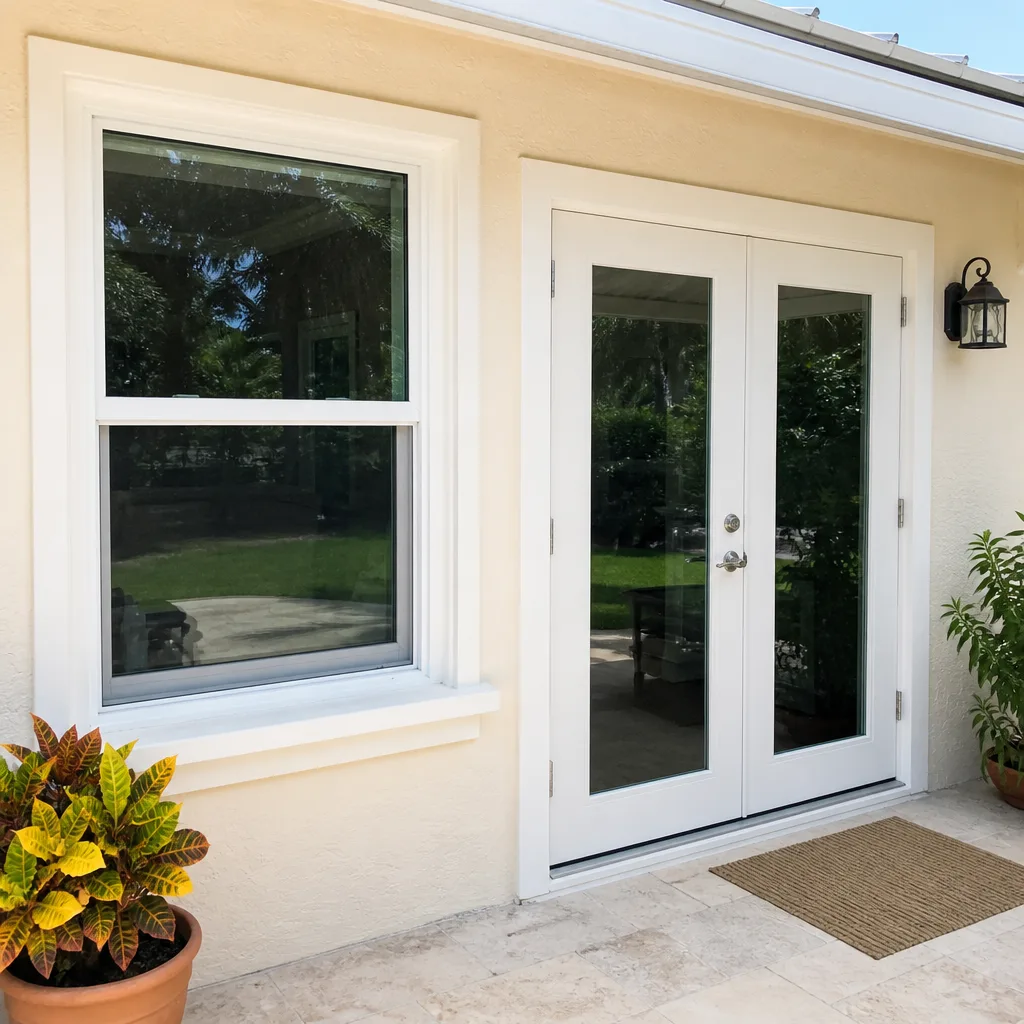 After
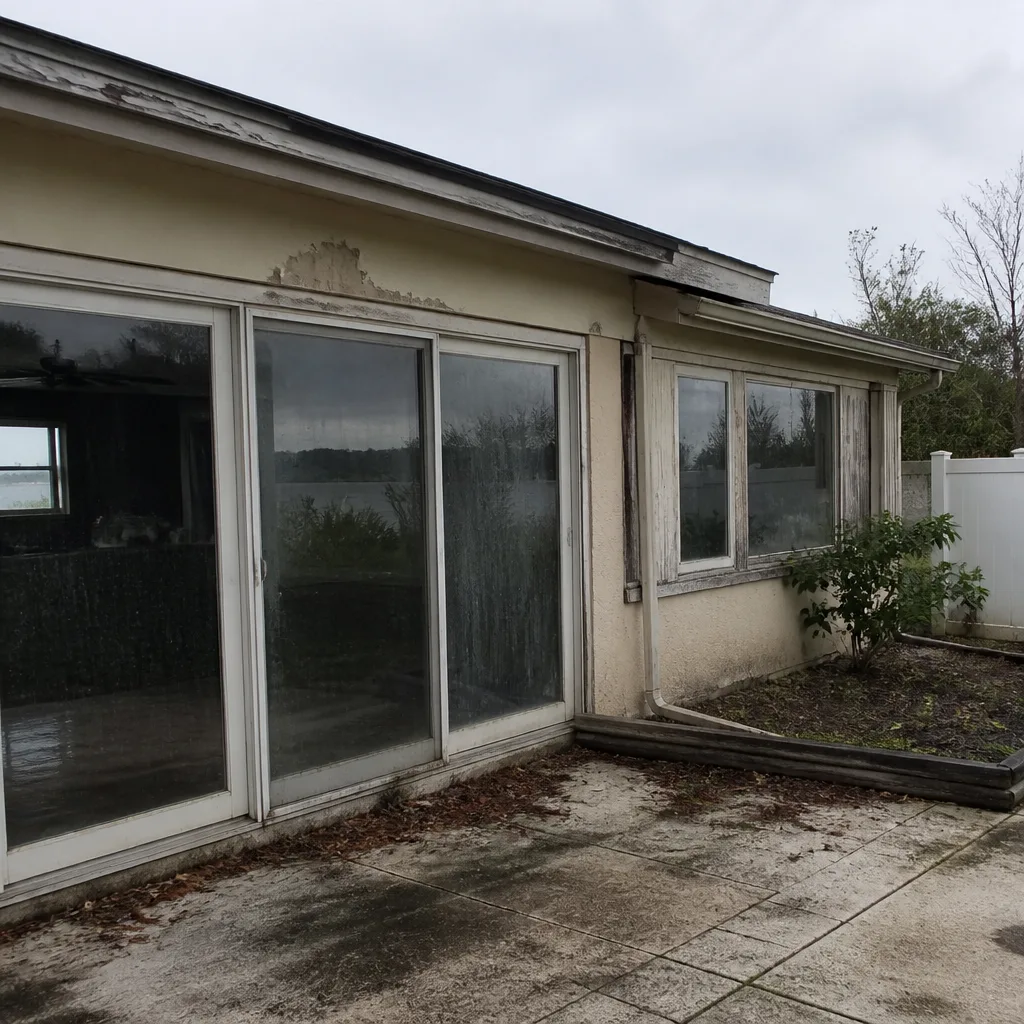 Before
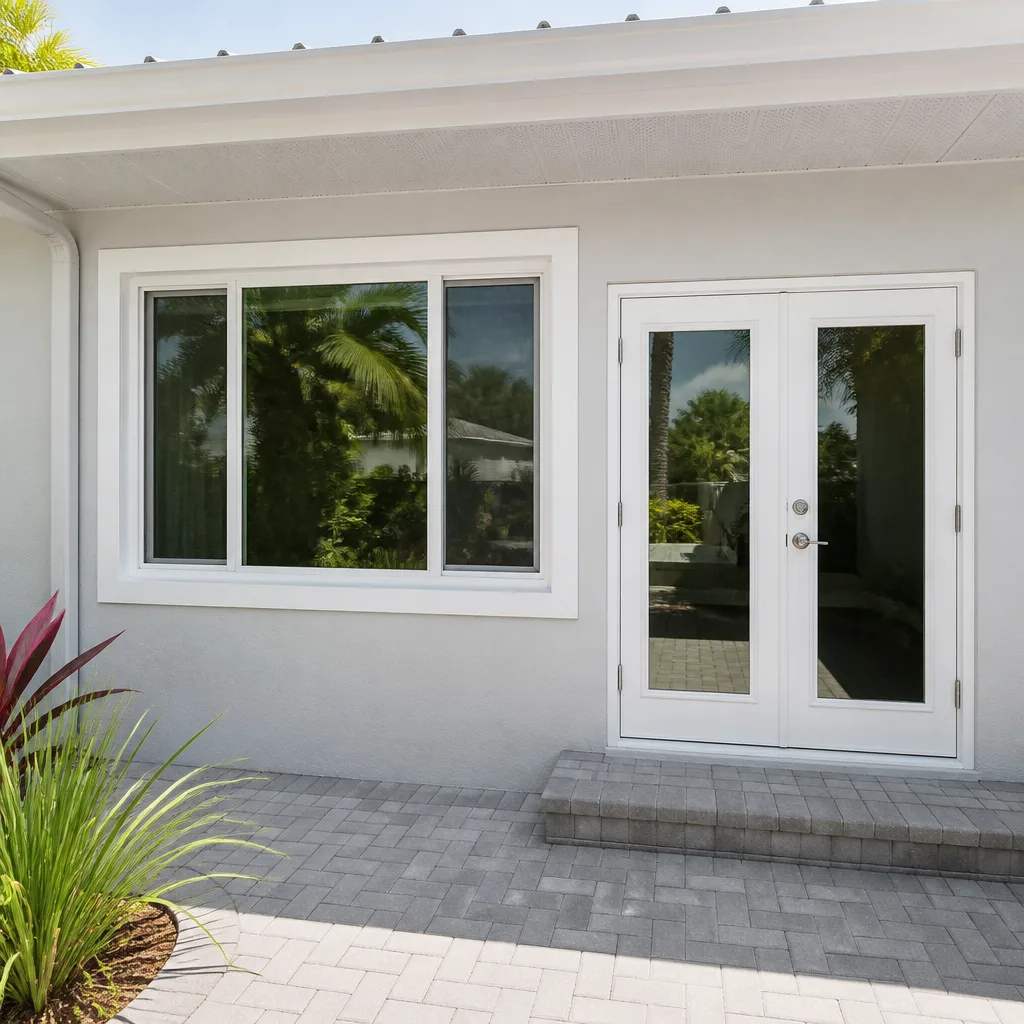 After
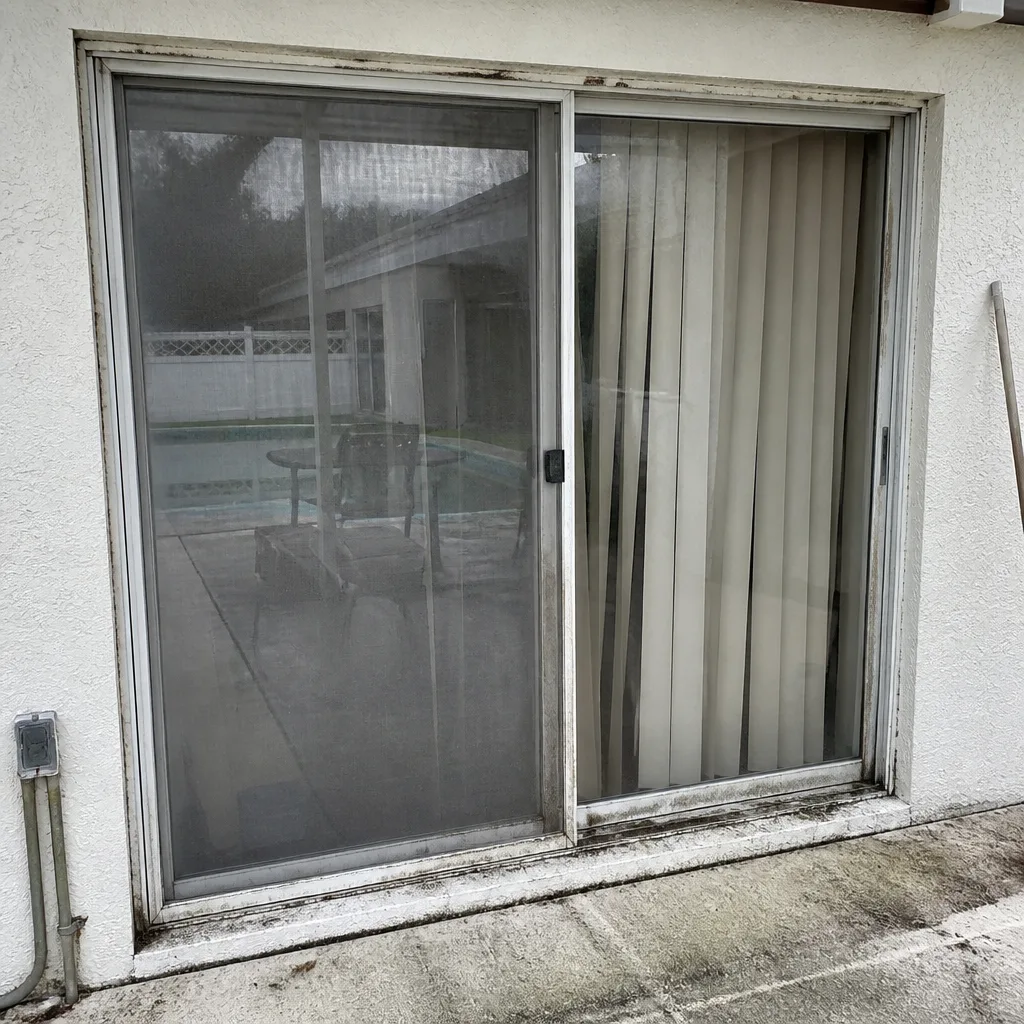 Before
 After
DIY vs Professional Windows & Doors: The Stuart Homeowner’s Decision Guide
A single window replaced incorrectly in Stuart costs homeowners an average of $840 more than the original bid once water intrusion, re-flashing, and trim repair get added to the bill. The Florida Building Code’s High Velocity Hurricane Zone requirements make Martin County one of the least forgiving places in the country to learn window installation by watching videos. This guide walks through the real differences between doing it yourself and hiring a licensed glazier, what Stuart’s climate and code demand, where DIY goes wrong, and how to decide based on the window or door in front of you.
Quick Answer
DIY makes sense for a narrow list of non-structural tasks: replacing a screen, lubricating rollers, tightening hardware, or reglazing a single sash in a shed or garage. Anything involving the rough opening, waterproof flashing, impact-rated glass, or a door that has to lock should be handled by a licensed professional, because Stuart’s hurricane code and humidity will expose every shortcut within one season, and the failures are rarely visible until they are expensive.
Table of Contents
- Where DIY Actually Makes Sense in Stuart
- Where DIY Goes Wrong: The Three Expensive Failures
- Stuart’s Code, Climate, and What They Mean for Your Openings
- The Real Cost Comparison: Bid Price vs What You Actually Pay
- Window Replacement vs Door Replacement: Different Risk Profiles
- Tools, Skills, and Time: What Professional Installers Bring
- Warranty and Insurance: The Part Nobody Reads Until It Matters
- A Simple Decision Framework for Stuart Homeowners
Where DIY Actually Makes Sense in Stuart
We install windows and doors for a living, and we still tell Stuart homeowners to do some jobs themselves. It would be dishonest to say otherwise. A competent person with a screwdriver, a ladder, and an hour on a Saturday morning can handle the following tasks safely and correctly:
- Screen replacement and repair. Spline, screening, a roller tool. Under thirty dollars in materials. No structural consequence if you get it slightly loose.
- Hardware tightening and adjustment. Doorknobs, hinges, casement cranks, sliding door handles. Most binding or rattling issues in Stuart homes trace back to loose screws, and tightening them is genuinely DIY work.
- Roller cleaning and lubrication. Sliding glass doors collect salt air and sand in the track, especially on Hutchinson Island and the St. Lucie River side of Stuart. Cleaning the track and applying a silicone-based lubricant to rollers is routine maintenance.
- Weatherstripping and seal replacement. Felt, foam, and vinyl seals on doors and older windows can be peeled off and replaced. The materials are forgiving and the cost of error is low.
- Reglazing a single pane in a non-structural window. A shed window, a garage window on an older home, a storm pane. If the frame is solid and the pane is small, a careful homeowner can do this with glazing compound and points. Not on a bedroom egress window, not on impact-rated glass, not on anything above the first floor.
What these jobs have in common is that they do not touch the rough opening, the flashing, the water barrier, or the structural fastening. That is the line. We have been doing this in Stuart since 2008, and our founder Dale Kessler has been around glass his whole life. Even he will tell you that changing a screen is not a job worth paying a professional for.
Where DIY Goes Wrong: The Three Expensive Failures
In our experience, DIY window and door projects fail in three predictable ways. We see them in Stuart homes every year, usually about eight to fourteen months after the original installation weekend.
1. Water Intrusion Through Improper Flashing
Flashing is the waterproofing layer that directs rain away from the rough opening and outside the wall cavity. It is the most skill-intensive part of any window or door installation, and it is the part tutorial videos compress into ninety seconds. In Stuart, where a summer afternoon can drop two inches of rain in an hour, a flashing mistake does not show up as a drip. It shows up months later as a swollen jamb, peeling paint, or a soft spot in the drywall two feet below the window. The repair bill to open the wall, address the rot, re-flash, and reinstall typically runs between $900 and $2,400, depending on the size of the opening and what got wet. The original window cost is long forgotten by then.
2. Out-of-Plumb and Out-of-Level Installations
A window installed even 1/8 inch out of square will bind, and a door frame out of plumb will swing open or closed on its own. Stuart homes built in the 1970s and 1980s, common in neighborhoods like North River Shores and Port Salerno, rarely have perfectly square openings anymore. The frame has settled. The rough opening has shifted. A professional installer expects this and corrects for it with shims, backer rod, and careful measurement. A DIY installer discovers it halfway through the job and either forces the unit in or leaves it crooked. The result is a window that fights against its own hardware every time it is opened, and a door that will not latch properly in July when the humidity swells the wood.
3. Voiding the Manufacturer’s Warranty on Day One
Every major window manufacturer we work with, including PGT, CGI, and CWS, has explicit language in the warranty requiring installation by a licensed professional. Install the unit yourself and the warranty is void, not just on the labor but on the glass, the frame, the seals, and the hardware. We register both manufacturer warranty layers in writing for every job we complete in Stuart, with the durations stated, before the truck leaves the driveway. That is what The Keystone Standard means in practice. A homeowner who installs their own unit gets a receipt from the supply house and precisely nothing else, because that supply house is not going to send a technician to Stuart to look at a fogged seal when the homeowner is not an authorized channel.
Stuart’s Code, Climate, and What They Mean for Your Openings
Stuart sits in a High Velocity Hurricane Zone under the Florida Building Code. That is not a marketing phrase. It is the actual regulatory classification, and it dictates more about your windows and doors than any preference or budget.
What the Code Requires
Any new or replacement window or door in a residential structure in Stuart must meet specific design pressure ratings, impact-resistance standards, or be protected by an approved shutter system. The exact requirements depend on your home’s location relative to the coast, the elevation of the building, and the wind speed maps in the current code edition. What does not change is that the structural fastening, the anchoring to the rough opening, and the water-resistance of the installation are all inspected. A homeowner can pull their own permit in Martin County, but the inspection process assumes the person on the permit knows what the inspector is looking at. Most do not, and the cost of failing an inspection and redoing the work is not covered by the money saved on installation labor.
Humidity, Salt, and Thermal Cycling
Stuart’s climate is hard on window and door assemblies in ways a homeowner from elsewhere might not expect. The average relative humidity in summer runs 80 percent or higher. Salt air from the Atlantic and the St. Lucie River accelerates corrosion on hardware and fasteners. Thermal cycling between air-conditioned interiors and 90-plus degree exteriors creates condensation potential at the edge of every glass unit. These conditions are why we quote manufacturer lines side by side on paper, in writing, so a Stuart homeowner sees exactly what they are buying. A unit rated for interior condensation resistance, a frame that resists salt corrosion, proper edge seals, and proper installation are all part of one system. Change one component and the other three don’t save you.
What We Have Seen in Stuart Specifically
Homes in Rocky Point and Sewall’s Point that were built before the 2001 Florida Building Code often have windows anchored with screws that are too short or too few for current requirements. Homes along the St. Lucie River south of downtown regularly show sill rot from wind-driven rain that found its way behind trim boards. And anywhere within a half-mile of the ocean, we see aluminum frames with pitting and seized hardware after eight to ten years unless they are properly finished and properly maintained. Stuart’s environment finds the weak point in a window or door installation. The only question is how long it takes, and whether the problem announces itself during a routine inspection or during a storm.
The Real Cost Comparison: Bid Price vs What You Actually Pay
The honest cost conversation starts with what a professional bid includes and what a DIY budget leaves out. A window replacement quote from a licensed Stuart contractor includes the unit, the installation labor, the flashing and sealing materials, the disposal of the old window, the permit, and the warranty registration. A DIY budget usually covers the unit, the sealant, and a case of water for the weekend. Here is what gets added elsewhere:
- Tools. A proper shim set, levels in multiple lengths, an impact driver, a reciprocating saw, pry bars, a brake or flashing material, and foam backer rod. One-time purchases, but they add $200 to $600 to the first job.
- Disposal. Old windows and doors are bulky. Martin County transfer stations charge by volume or weight, and a single full-size sliding glass door can cost $40 to $80 to dispose of properly. The old glass, frame, and hardware all travel somewhere.
- Permit fees. Martin County building permits for window and door replacements run into the hundreds of dollars depending on the number of openings and the scope. A homeowner pulling the permit pays it. A contractor pulls it and works it into the bid.
- Failure and rework. The National Association of Home Builders has published data showing that the cost of redoing improperly installed work averages 40 percent more than doing it correctly the first time. In Stuart, where water intrusion shows up late and the damage is hidden, that number trends higher.
- Time. A professional crew installs a standard window in two to four hours. A homeowner doing it the first time should expect a full day per opening, and that is if nothing goes wrong.
Where DIY Saves Money, Genuinely
On a simple screen replacement, DIY saves the entire labor cost of a service call, which might run $75 to $150. On hardware tightening and roller maintenance, DIY saves a maintenance trip. On weatherstripping, DIY saves $100 to $200 in labor. These are real savings on the jobs that are safe to do yourself. On a full window or door replacement, the DIY savings disappear into rework risk, warranty voidance, and the cost of mistakes the homeowner does not yet know how to recognize.
Window Replacement vs Door Replacement: Different Risk Profiles
Not all openings are equally dangerous to get wrong. A fixed picture window is a pane of glass in a frame. An entry door is a security boundary, a weather boundary, and a structural component all at once. The decision to DIY should account for which one you are touching.
Windows: The Flashing Is the Job
The glass unit itself is manufactured to tolerances far tighter than anything a homeowner can affect. The installation is where the risk lives. A properly flashed and anchored window in a Stuart home will shed water for twenty years. The same window with a single missed layer of flashing will rot the wall cavity in five. Fixed windows and single-hung units are less complex than casements and awnings, which have more moving hardware and more sealing points. But every window shares the same consequence structure: mistakes stay hidden until the damage is expensive to fix.
Doors: Security and Structure Compound the Risk
An exterior door in Stuart is doing three jobs at once. It keeps people out, which means the deadbolt and strike plate have to align perfectly in a frame that has been shimmed true. It keeps weather out, which means the threshold, sweep, and weatherstripping have to form a continuous seal against wind-driven rain. And it holds the building envelope together at a point where the wall is permanently interrupted. A door that binds in July, when the humidity expands the slab, is a door that was not properly shimmed in January. A door that leaks at the threshold is a door whose pan flashing was skipped because the homeowner did not know it was part of the job. We replace doors in Stuart homes regularly, and the calls we get most often are from people who tried to save the labor on a door and now have a door that will not lock and a threshold that channels water into the kitchen.
Tools, Skills, and Time: What Professional Installers Bring
A licensed Stuart glazier shows up with a truck full of tools, a working knowledge of the current Florida Building Code, and a set of hands that have done this specific job hundreds of times. There is no shortcut for accumulated craft. Our technicians measure every opening twice before ordering or cutting anything, and they set units with levels, shims, and fasteners in a sequence that keeps the frame square while it goes in. They know where the water goes because they have watched it go the wrong way enough times to know the difference.
- Code familiarity. The inspector is looking for specific anchoring patterns, specific flashing methods, and specific materials. A professional knows what the inspector expects before the job starts.
- Product knowledge. We are an authorized installer for more than a dozen manufacturer lines, including, PGT, CGI, and ES Windows. Each line has its own installation requirements, its own flashing details, and its own warranty paperwork. We quote them side by side on paper so the homeowner sees exactly what they are buying.
- Time efficiency. Most window and door jobs in Stuart are completed in a single visit. The benefit is not speed for speed’s sake. The benefit is that the opening is never left exposed to the elements overnight, which matters in a place where afternoon thunderstorms are a daily summer occurrence.
- Warranty registration. Both manufacturer warranty layers are registered in writing, with durations stated, before the truck leaves the driveway. That is The Keystone Standard, and it is the difference between a warranty that works and a warranty that lives in a drawer.
Warranty and Insurance: The Part Nobody Reads Until It Matters
The day a homeowner discovers their window warranty is void is the day the glass has already failed. Manufacturer warranties on windows and doors are conditional documents. They cover defects in materials and workmanship, and they assume professional installation by a qualified contractor. The language varies by manufacturer, but the pattern does not: install it yourself and the coverage disappears. PGT, CGI, and CWS, all of which we install regularly in Stuart, write their warranties for the channel they are selling through. The supply house that sells to a DIYer does not register that homeowner as an authorized channel, and the manufacturer has no obligation to service the unit.
Insurance works the same way. A homeowner’s policy covers damage to the home, but if a window installed by the homeowner fails and allows water intrusion, the insurance company will investigate the installation. If the installation was not permitted, not code-compliant, or not done by a licensed contractor, the claim can be denied. We have seen it happen in Martin County more than once. The homeowner saved $1,800 on installation and then ate a $12,000 repair bill because the insurance adjuster looked at the flashing and closed the file.
The Done Right Promise covers our workmanship on every job. If it is not done right, we make it right, with no paperwork fights and no arguing. That promise is not a coupon. It is a statement that the job was done correctly and that we will stand behind it. Dale Kessler keeps one rule on the whiteboard in our office: if the pane is not true, the job is not done. That rule has governed every install since the day he founded this company, and it is the reason we put the warranty in writing before we leave.
A Simple Decision Framework for Stuart Homeowners
Here is the framework we recommend to homeowners deciding between DIY and professional installation. It is the same framework we would recommend to our own family in Stuart.
- Identify what is broken or being replaced. Is it a screen? A handle? Weatherstripping? Or is it the entire window or door unit? The first category is DIY territory. The second is professional territory.
- Locate the opening. Is it on the ground floor? Is it an egress window in a bedroom? Is it above the first floor? Height and access change both the safety calculation and the difficulty of the job.
- Check the code requirement. If the opening is in a structure subject to the Florida Building Code’s HVHZ provisions, which is nearly every residence in Stuart, the installation requires a permit and an inspection. That alone settles the question for most homeowners.
- Consider the warranty. Will the manufacturer honor the warranty if you install the unit yourself? The answer is almost always no. That single fact should carry more weight than any tutorial video.
- Be honest about the consequences. If this job fails, what is the repair bill? On a shed window, the consequence is low. On a second-floor impact window over a living room, the consequence is a water-damaged ceiling, drywall, insulation, and framing.
- Call a professional if any answer points that way. TruePane Windows & Doors offers free estimates in Stuart, and we will tell you if a job is DIY-appropriate. We would rather spend fifteen minutes on the phone saving you from a bad weekend than spend a day fixing the result.
Common Mistakes to Avoid
- Reusing old flashing. Flashing is a one-time-use material. Peel it off, and it is done. Reusing flashing is the most common DIY mistake we see in Stuart homes, and it is the direct cause of most sill rot we repair.
- Skipping the permit. The Martin County Building Department will eventually find out, usually when you sell the house or when an insurance claim triggers an inspection. Unpermitted work is a disclosure problem, an insurance problem, and a resale problem wrapped together.
- Ordering the wrong size. A window is measured at the rough opening, not at the old window’s visible frame. Off by half an inch and the unit does not fit without structural modification, which is a much bigger job than the original replacement.
- Using foam as the only sealant. Expanding foam is an insulator, not a waterproof barrier. Some homeowners seal the entire perimeter with foam and skip the flashing and backer rod entirely. In Stuart’s rain, that window leaks within a season.
- Installing impact glass without impact hardware. Impact-rated glass in a frame anchored with standard screws does not meet the code requirement and will not perform as rated. The glass, frame, fasteners, and anchoring method are one system, and they all have to meet the same standard.
- Waiting until a storm is coming. August is the worst time to need window or door work in Stuart because every contractor in Martin County is booked. Plan replacements in the dry season, between November and May, when scheduling is realistic and materials are available.
When to Call a Professional
Call a professional if the job touches the rough opening, the flashing, the anchoring, or the permit. Call a professional if the window or door is impact-rated, if the opening is above the first floor, or if the existing installation shows signs of water damage behind the trim. Call a professional if the warranty matters to you, and it should. TruePane Windows & Doors offers free estimates in Stuart, and a live person answers the phone 24 hours a day, 7 days a week. Call (754) 324-4646 and we will measure, quote, and tell you straight whether the job is worth hiring out or doing yourself.
Frequently Asked Questions
Window replacement in Stuart typically runs between $600 and $1,800 per window installed, depending on the size, material, impact rating, and condition of the existing opening. A standard vinyl single-hung on the ground floor lands at the lower end; a large impact-rated casement or a custom aluminum unit on the second floor lands at the upper end. Call (754) 324-4646 for an exact quote, which includes the permit, flashing, installation, and warranty registration in writing.
Legally, a homeowner can pull their own permit and install their own impact windows in Martin County, but the installation must meet the exact anchoring, flashing, and design pressure requirements of the Florida Building Code. The manufacturer’s warranty will be void, and the installation will be inspected. If the inspection fails, the rework is on you. We recommend professional installation for any impact-rated product, and we stand behind every install we do in Stuart.
A window needs replacing when the seal has failed and condensation forms between the glass panes, when the frame is soft with rot, or when the unit no longer meets current impact and energy code requirements. Replace hardware, weatherstripping, and exterior seals as repair work. If you’re not sure which one you are looking at, call us at (754) 324-4646 and we will tell you honestly.
Yes. Martin County requires a building permit for replacement windows and doors when the work involves structural changes, impact-rated products, or changes to the opening size. This is true whether a homeowner or a contractor does the work. We pull the permits for our jobs in Stuart and handle the inspections, so the homeowner never has to chase paperwork.
Most standard window and door jobs in Stuart are completed in a single visit, usually four to six hours for a typical home with five to eight openings. Larger projects, custom units, or jobs requiring stucco repair and repainting around the openings take longer. We schedule jobs around Stuart’s weather so the openings are never left exposed to rain.
It covers our workmanship on every job we complete. If the installation is not done right, we make it right within 90 days, with no paperwork fights and no arguing. It also means both manufacturer warranty layers are registered in writing, with durations stated, before the truck leaves the driveway. That is The Keystone Standard, and it applies to every window and door we install in Stuart.
The Bottom Line
DIY is right for screens, hardware, rollers, and weatherstripping. It is wrong for any job that touches the rough opening, the flashing, the anchoring, the permit, or the warranty. Stuart’s climate and code make the margin for error thin, and the failures are expensive. A licensed glazier brings code knowledge, product knowledge, proper tools, and a warranty that is registered in writing. The cheapest bid is not the safest bet, and the safest bet is not always the most expensive. The right answer is the one you can stand behind when the storm comes and the rain hits. That is what we do at TruePane Windows & Doors, and we have been doing it since 2008 of combined craft and community service. Call (754) 324-4646 for a free estimate, and we will give you a square deal, in writing, before you spend a dollar.
Written by Dale Kessler, Owner at TruePane Windows & Doors, serving Stuart since 2008.
Six Reasons Homeowners Choose TruePane Windows & Doors
Impact systems engineered to design pressures up to +/-100, matched to your wind zone - your openings hold when the storm arrives.
Low-E insulated impact glass from our manufacturer lines commonly cuts monthly cooling bills 20-30%.
Laminated impact glass shuts out up to 40% of outside noise - traffic, neighbors, weather.
Monitoring services run $30-90 a month. Laminated impact glass resists forced entry around the clock, with no subscription.
Florida homeowners average around 25% savings on the windstorm portion of their policy after protecting every opening - some homes qualify for more.
A full impact package upgrades curb appeal, buyer confidence and appraised value in one project.