
Last updated August 25, 2026
Free in-home measure and quote - PGT, CGI and CWS impact lines compared on your actual openings, style by style
Sliding glass doors
Impact garage doorsPGTCGI
 Before
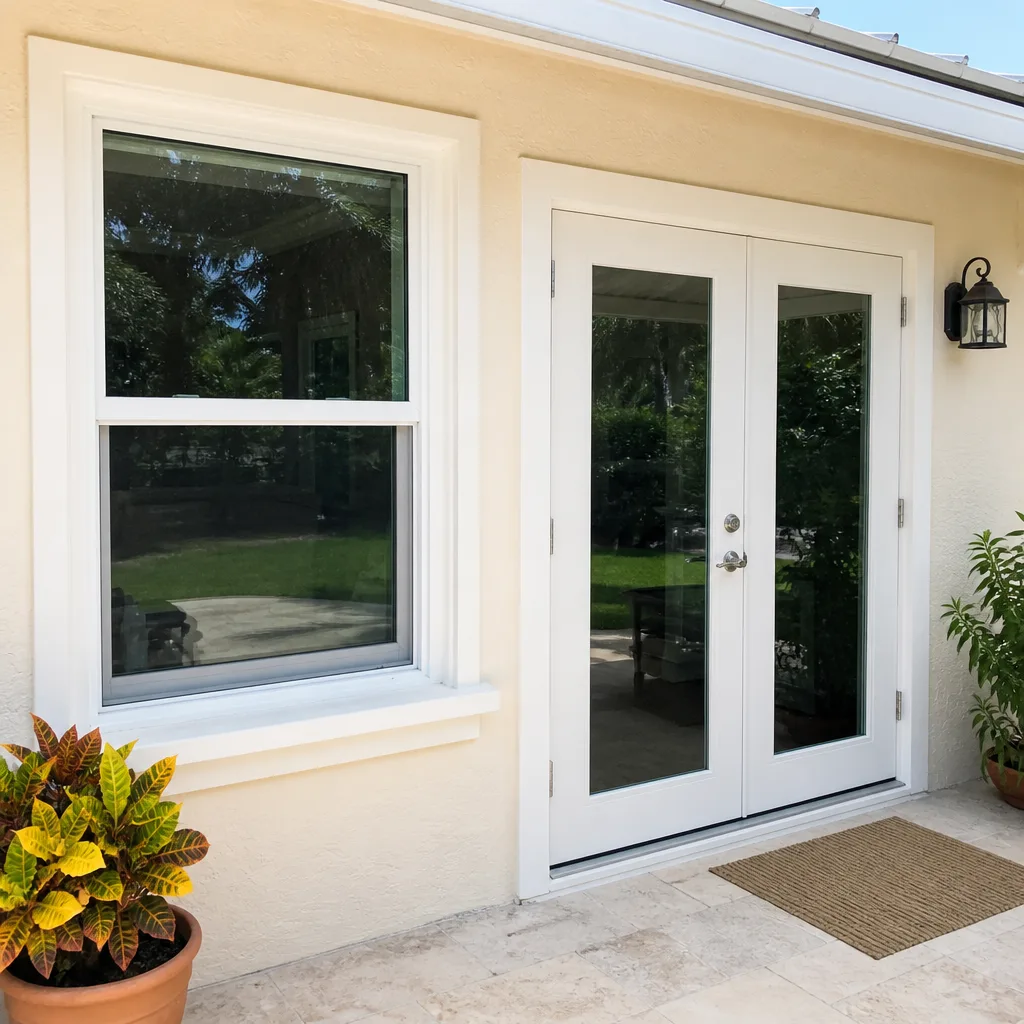 After
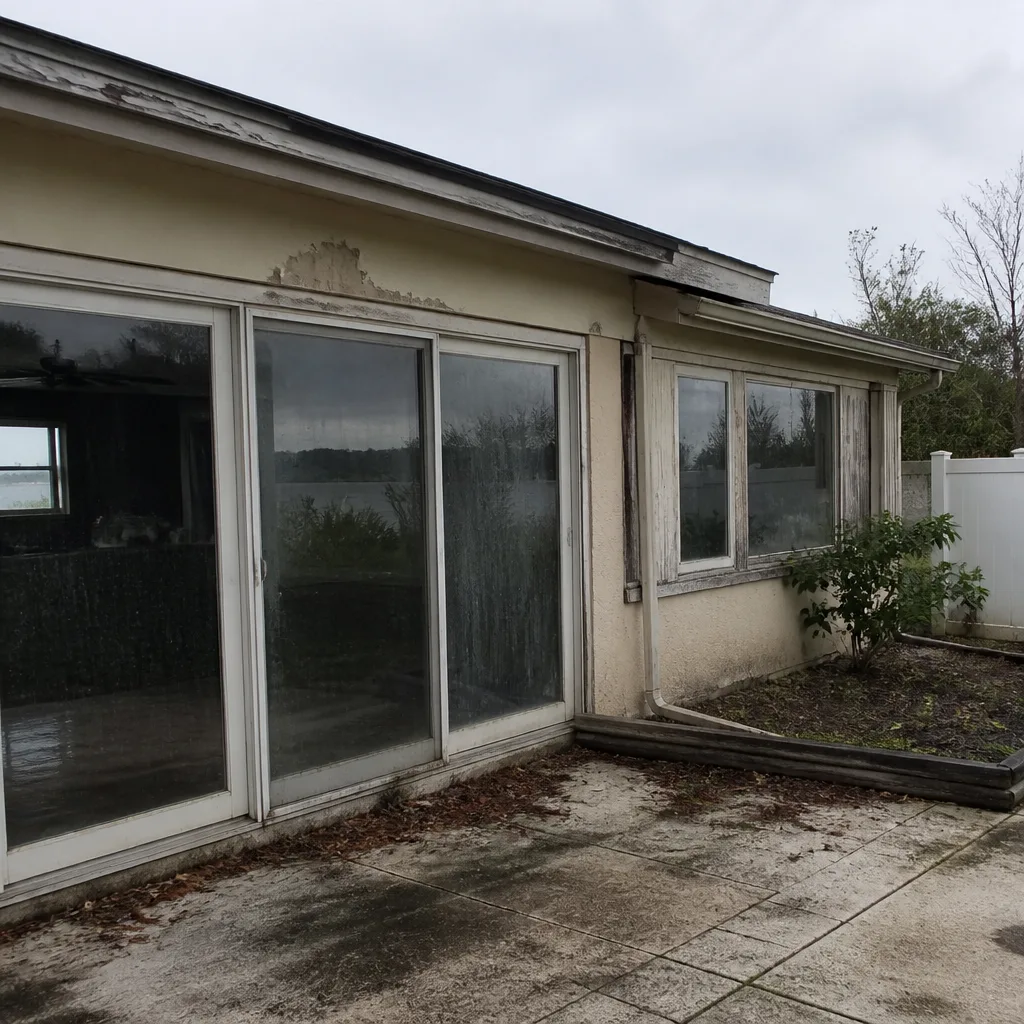 Before
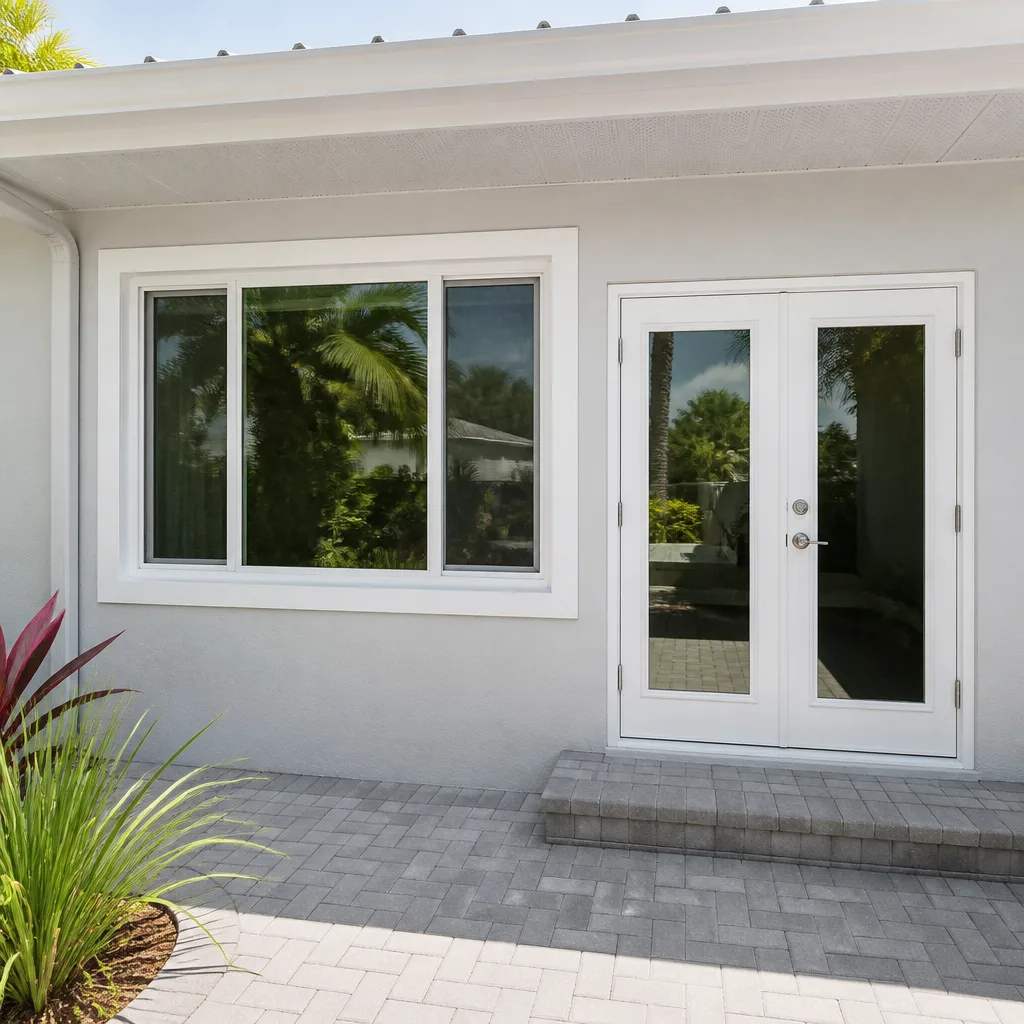 After
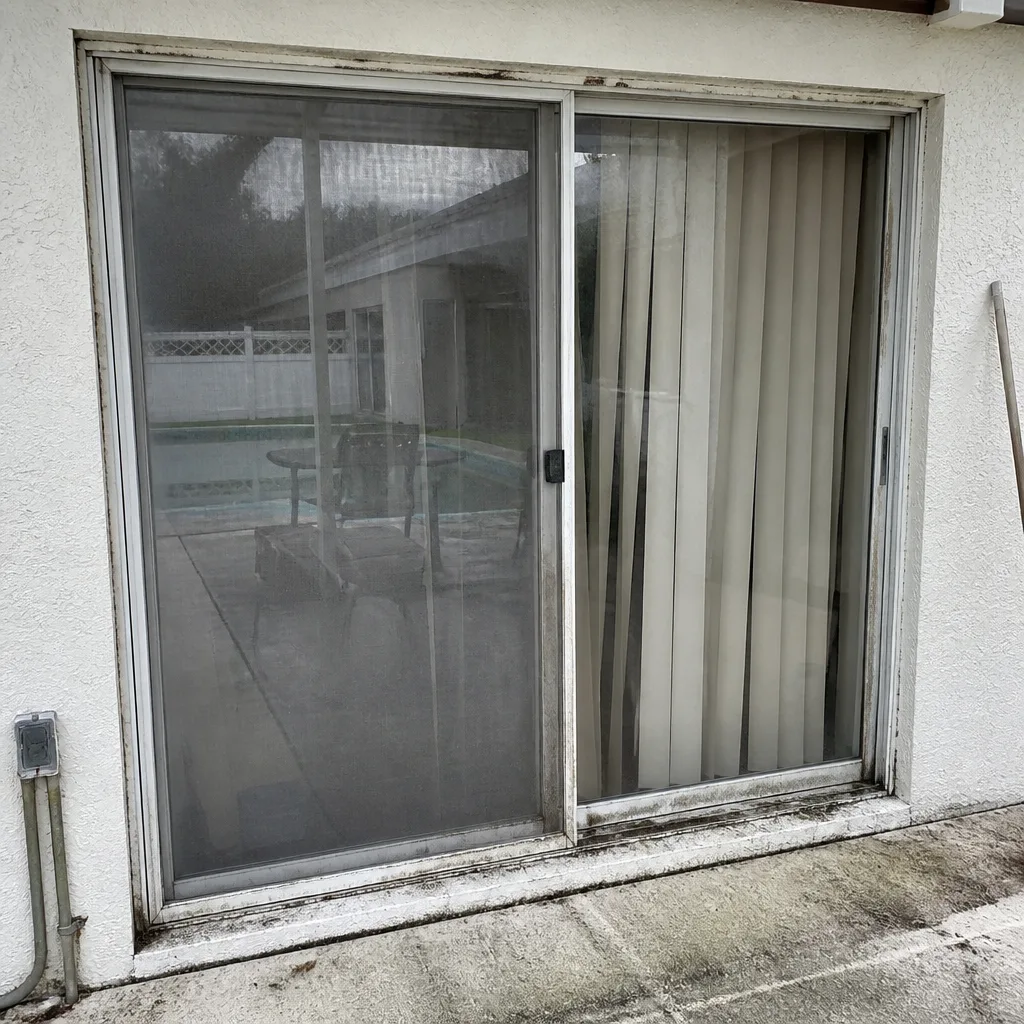 Before
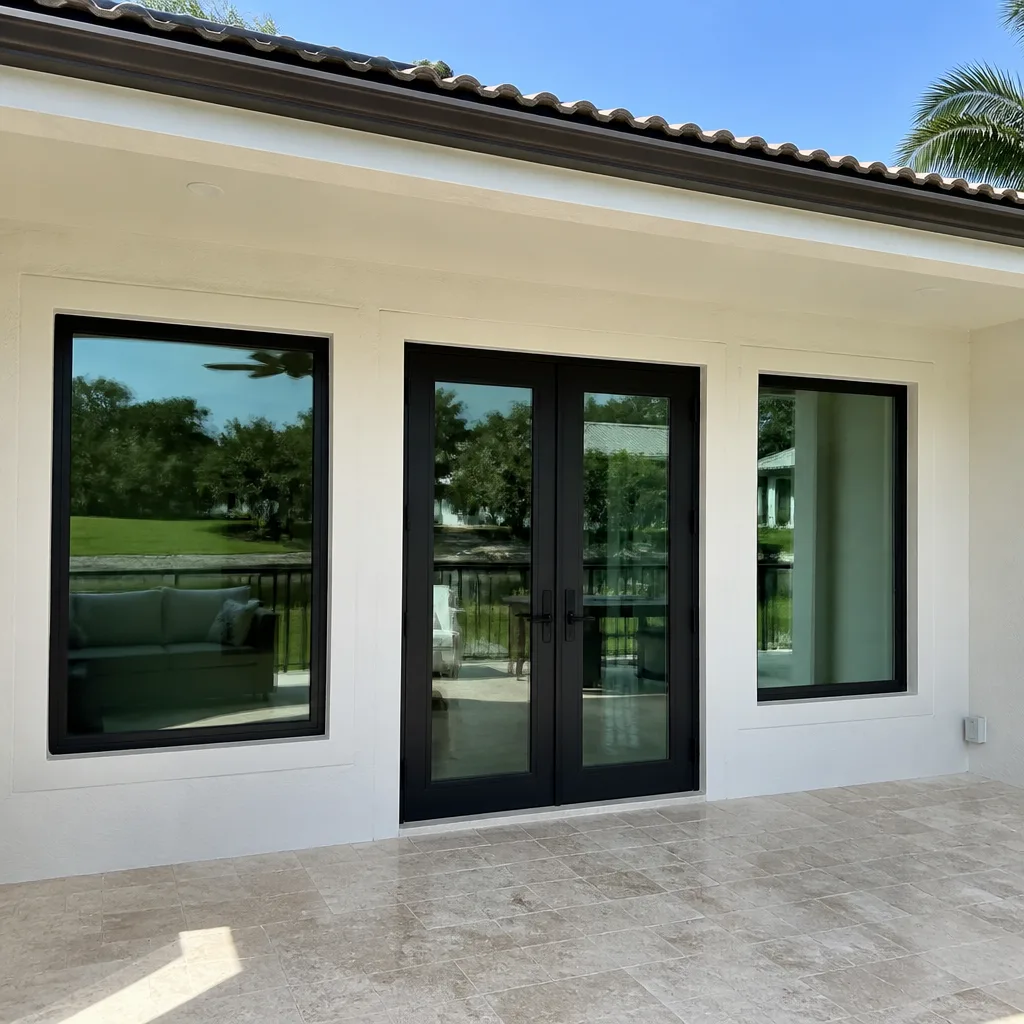 After
Windows & Doors Warning Signs: A Stuart Homeowner’s Reference Guide
Most Stuart homeowners don’t replace a window because they want to. They replace it because the house finally told them something was wrong, and they listened a year too late. A fogged pane, a door that jams every July, a utility bill that climbs while the thermostat stays put – these are not quirks of an older Florida home. They’re mechanical failures with consequences that compound quietly, often for years before the damage becomes impossible to ignore. This reference guide explains which warning signs genuinely matter, which ones are cosmetic, and what a Stuart homeowner should expect to pay when the time comes to fix them. We wrote it because we’ve been called out to enough homes in Stuart where a $40 seal failure turned into a $4,000 wall repair that we’d rather you catch it early.
Quick Answer
The first warning signs of failing windows and doors in Stuart are fog or condensation between glass panes, visible daylight or drafts around frames, sashes that stick or won’t stay open, soft or crumbling wood at the sill, and doors that bind against the jamb in summer humidity. Any one of these means the unit’s seal or installation has failed and the problem will get worse, not better. Repair costs in Stuart typically run $180 to $650 for a single window or door, while full replacement of a standard window runs $450 to $1,200 installed depending on brand and framing conditions.
Table of Contents
- Fogged Glass and Failed Seals: What’s Actually Happening
- Drafts, Daylight, and the Myth of the “Snug-Fitting” Old Window
- Sticking Sashes and Doors That Bind: The Stuart Humidity Factor
- Rotted Frames, Soft Sills, and Termite Damage
- Sweating Windows: When Condensation Is Normal and When It’s a Warning
- Impact Windows in Stuart: What Failure Looks Like Before the Storm
- What Window and Door Repair Costs in Stuart
- Replacement: How to Decide Between Repair and Full Replacement
Fogged Glass and Failed Seals: What’s Actually Happening
A double-pane window is not two pieces of glass touching each other. It’s a sealed unit – two panes separated by a spacer and filled with argon or krypton gas, with a perimeter seal that keeps moisture out and the gas in. When that seal fails, the insulating gas escapes, outdoor air gets in, and condensation forms on the inside surface of the glass where you can’t wipe it away. The cloudiness is permanent. No amount of sunny weather fixes it.
In Stuart, the coastal salt air accelerates seal failure compared to inland Florida. Homes within a few miles of the St. Lucie River or the Atlantic see seals degrade measurably faster, and we see the same pattern in neighborhoods like Sewall’s Point, Rocky Point, and North River Shores. The salt settles on the glass edge and eats at the sealant over time. A window that would last 20 years in Orlando might start fogging at year 15 in Stuart, purely because of the environment.
The fix is not a DIY film or a defogging service that drills a tiny hole and “ventilates” the unit. Those services can clear the fog temporarily, but once the seal is gone, the window has lost its insulating value permanently. The proper repair is replacing the insulated glass unit, which in Stuart typically runs $180 to $500 per window depending on size, glass type, and whether the sash needs reglazing. Most single-unit repairs are completed in one visit by a glazier who carries the replacement glass on the truck.
We replace failed glass units for homeowners throughout Stuart, and we always measure twice before cutting. It’s the same discipline TruePane Windows & Doors home has brought to every job for years: if the pane is not true, the job is not done.
Drafts, Daylight, and the Myth of the “Snug-Fitting” Old Window
If you can see daylight between the sash and the frame when the window is closed, the weatherstripping is gone or the frame has shifted. If you can feel air moving on a windy day, the window is no longer doing its job. Some homeowners tell us their old wood windows “fit snug” because they’re hard to open. That’s not snug. That’s paint and humidity swelling the wood into the track. It has nothing to do with a proper seal.
The practical test in Stuart is the dollar bill test. Close the window on a dollar bill and try to pull it out. If it slides free with little resistance, the weatherstripping has compressed past usefulness. Do this on multiple windows – especially the ones facing east toward the ocean breeze – and you’ll usually find the leakiest ones are the ones you’ve lived with so long you stopped noticing.
The cost of drafts is not subtle. The Department of Energy estimates that windows account for 25 to 30 percent of a home’s heating and cooling energy loss. In South Florida, where air conditioning runs nine to ten months a year, a house with failing weatherstripping on eight or ten windows is leaking conditioned air every hour the system runs. The fix for most draft issues is replacement weatherstripping or, if the frame itself has shifted, a new window. Weatherstripping replacement runs $60 to $150 per window in Stuart. A new standard double-hung window, installed, runs $450 to $900 depending on brand and framing.
Our technicians carry weatherstripping profiles for every major window brand, including PGT, Andersen, and Ply Gem, so most draft repairs are handled in a single visit, with no second appointment left hanging.
Sticking Sashes and Doors That Bind: The Stuart Humidity Factor
Stuart’s relative humidity averages 74 percent year-round and spikes above 90 percent in summer. Wood and wood-composite window sashes absorb that moisture, expand, and begin to bind against the frame. A window that was easy to open in January becomes stubborn in August. A door that closes cleanly in the dry season binds at the top corner during the rainy season. Homeowners who have lived in the same Stuart house for twenty years have watched this cycle repeat enough times that they can predict it. What they may not know is that every cycle does incremental damage to the operating hardware and, eventually, to the frame itself.
Here’s what to check when a window or door starts binding:
- Look at the reveal. The gap between the sash and frame should be even on both sides. If it’s tight on one side and wide on the other, the frame has moved or the sash has warped.
- Check the hardware. Balances, hinges, and rollers wear out with use and especially with force. If you’ve been forcing a sticky window open for years, the hardware is likely worn out too.
- Test the door at different times of day. A door that binds only in the afternoon sun may be expanding from heat, which points to a poorly sealed or improperly flashed slab.
- Look for finish wear. Bare wood exposed by years of rubbing is now absorbing moisture directly, which accelerates the swelling cycle.
The repair for a binding door in Stuart is often a combination of hardware replacement and planing or trimming the slab, which costs $150 to $400. For a window, it’s usually new balancers or a sash replacement at $120 to $380. Catching it early saves the frame. Ignoring it long enough means full replacement. Dale Kessler, our founder, has walked into enough Stuart homes where the homeowner lived with a binding door for a decade without realizing the frame was rotting behind the trim. It’s a lesson we pass on to every apprentice we train.
Rotted Frames, Soft Sills, and Termite Damage
Wood rot in window frames progresses like this: first the paint blisters, then the wood turns spongy under thumb pressure, then a screwdriver sinks in, and finally the structure fails. By the time you can see bubbling paint or dark staining, the rot has usually extended beyond what’s visible. The Stuart climate, with its heavy summer rains and persistent humidity, makes this a year-round concern, not a seasonal one.
Termite damage often looks similar to rot but the treatment is different. Both conditions soften the wood, but termite damage requires treating the infestation before any structural repair makes sense. In Stuart, drywood and subterranean termites are both active, and they’re particularly fond of window and door framing where moisture accumulates. If you tap a sill and it sounds hollow, or if you see small holes with fine sawdust-like pellets under the window, you’re looking at termite activity, not weather.
When we assess a window with soft wood, we cut away the damage to find the edge of solid material. Sometimes that means replacing a sill. Sometimes it means rebuilding the rough opening. Here’s what the numbers look like in Stuart:
- Sill replacement only: $120 to $350 for standard sizes when the surrounding framing is sound.
- Frame repair with partial replacement: $300 to $700, depending on how far the rot extends.
- Full window replacement with rough opening repair: $650 to $1,400 per unit, if the rot has compromised the structural framing.
If you find one rotted window in a Stuart home, check the ones adjacent to it and the ones on the same wall. Rot rarely works alone. It travels through the rough opening and along the sheathing. A thorough inspection is the cheapest thing you’ll ever pay for.
Sweating Windows: When Condensation Is Normal and When It’s a Warning
Condensation on the inside of a window on a humid summer morning in Stuart is not always a window failure. It can be as simple as the indoor air being humid and the glass being cold from the air conditioning. You’ll see it on bathroom windows after a shower, on kitchen windows during cooking, and on bedroom windows in homes where the AC is set very low. If the condensation wipes away and doesn’t return until the next humid morning, the window is fine.
The warning sign is condensation that appears between the two panes of glass. That is a seal failure, full stop, and it will not wipe away because the moisture is trapped inside the sealed unit. It looks like a permanent fog, sometimes with small water droplets visible inside. Left alone, it can eventually etch the glass surface and leave permanent mineral stains.
The other warning sign is condensation on the inside of the glass that persists even in dry weather. That points to high indoor humidity or a failing window, and in a Stuart home it often means both. Coastal homes, especially older ones built before modern moisture barriers, carry more indoor humidity than their HVAC systems were sized to handle. A dehumidifier helps, but the window is still transferring heat and cold inefficiently if the glass temperature is low enough to cause condensation. We treat persistent condensation as a diagnostic, not an annoyance, and it usually leads to a recommendation more specific than “wipe the glass.”
Impact Windows in Stuart: What Failure Looks Like Before the Storm
Stuart sits in a Florida wind zone where impact-rated windows and doors are not optional luxury items – they’re the difference between riding out a hurricane safely and watching your roof lift off because the envelope was breached. Impact windows fail in specific, detectable ways, and none of them announce themselves as loudly as you’d hope. Here’s what to look for:
- Laminated glass clouding or delamination. Impact glass is two panes with a polymer interlayer. When the edge seal fails, moisture gets into the interlayer and creates a milky haze that grows over time. This is a structural failure of the unit’s protective layer.
- Cracked or shifted interlayer visible at the edge. Look at the edge of the glass where it enters the frame. If you can see separation or clouding there, the unit’s integrity is compromised.
- Frames pulling away from the structure. Impact windows carry a wind load that standard windows don’t. If the frame is not properly anchored, you’ll see gaps opening between the frame and the stucco or siding, especially after a strong storm has passed.
- Difficulty engaging locks or multi-point hardware. Impact windows and doors use heavier hardware designed to hold the panel in place under extreme pressure. If the locks are stiff, misaligned, or won’t engage, the unit won’t perform to its rating.
Stuart building codes require impact-rated or properly shuttered openings on new construction and major renovations. Many older Stuart homes still have non-impact windows, and those homeowners are making a calculated risk every hurricane season. The retrofit cost for a standard PGT, CGI, or CWS impact window in Stuart runs $700 to $1,400 per unit installed, with doors running higher depending on size and configuration. It’s not a small number, but it’s written against the cost of what happens when the window fails at the worst possible moment. We work with homeowners in Stuart to phase replacement over time, starting with the windward exposures, so the project fits a budget without leaving the house undefended.
What Window and Door Repair Costs in Stuart
Here’s a straight answer to the question every Stuart homeowner asks first: what’s this going to cost. The numbers below reflect what we’re currently seeing across Stuart, from Rio to Port Salerno to the older neighborhoods off East Ocean Boulevard. They’re realistic ranges, not a teaser to get you to call. If someone quotes you less than the bottom of these ranges, ask whether the quote includes the glass, the hardware, the labor, and the cleanup. Most of the time, it doesn’t.
| Repair Type | Typical Cost in Stuart | What Affects the Price |
|---|---|---|
| Insulated glass unit replacement | $180 – $500 per unit | Size, Low-E coating, tint, gas fill |
| Weatherstripping replacement | $60 – $150 per window | Window brand and profile availability |
| Sash balance or hardware repair | $120 – $380 per window | Single vs. double hung, hardware type |
| Sill replacement | $120 – $350 per sill | Material, extent of rot, accessibility |
| Sliding door roller replacement | $150 – $400 per door | Door size, roller type, track condition |
| Full window replacement (standard) | $450 – $1,200 per unit | Brand, frame material, installation conditions |
| Impact window replacement | $700 – $1,400 per unit | Brand (PGT, CGI, CWS), size, anchor requirements |
These are fixed-price ranges from our own jobs in Stuart, and they include labor, materials, and cleanup. We don’t do change orders unless we open a wall and find something no one could have seen – and even then, we stop, show you what we found, and put the revised number in writing before we pick up a tool. That’s the square-deal approach Dale built the company on.
Replacement: How to Decide Between Repair and Full Replacement
There’s a point where repairing a window or door stops making sense. It’s different for every unit and every house, but the calculation follows a few consistent rules. Here’s how we walk a Stuart homeowner through the decision:
- How old is the unit? If the window is more than 20 years old and has failed in one way, it will fail in another way soon. The incremental repair costs start approaching replacement cost.
- Is the frame sound? A failed glass unit in a solid frame is a repair. A failed glass unit in a frame with rot, termite damage, or structural shifting is a replacement.
- Are you paying high energy bills already? Old single-pane windows in Stuart homes leak conditioned air. Replacing them with modern Low-E insulated units reduces the load on your AC and pays back over time.
- Is the window part of a matched set? Replacing one window with a slightly different glass or tint creates a visible mismatch. Sometimes that matters, sometimes it doesn’t, but you should make the choice deliberately.
- Does the home need impact protection anyway? If you’re going to upgrade to impact windows eventually, repairing a failing standard window is money spent twice. Phase the replacement and skip the repair.
We tell customers this: don’t repair a window you wish you’d replaced. And don’t replace a window that just needs a $200 glass unit. The honest answer comes from looking at the whole envelope, not the single unit in front of you. That’s why our estimates are free and why we measure every opening twice. If you’re in Stuart and you’re not sure, call us at (754) 324-4646 and we’ll tell you what we’d do if it were our house.
Common Mistakes to Avoid
- Ignoring fogged glass because “it still works.” A fogged unit has no insulating gas left, which means you’re running the AC harder to compensate. The repair is usually under $300. The energy cost of ignoring it compounds every month.
- Painting over rotted wood. Paint seals in moisture and accelerates the rot. If the wood is soft, it comes out. Priming over rot buys you a rainy season, maybe two, in Stuart’s climate, and then the bill doubles.
- Forcing a sticky window. The binding is telling you something has shifted or swollen. Forcing it bends the hardware and warps the sash. A $150 hardware repair becomes a $900 replacement.
- Weatherstripping a door that binds. If the door is physically hitting the frame, new weatherstripping won’t fix it. You need to adjust the slab or plane the edge. Adding weatherstripping to a binding door just creates a different problem.
- Replacing windows without checking the flashing. In Stuart, where wind-driven rain hits horizontally during storms, flashing is as important as the window itself. A poorly flashed window leaks behind the siding, where you can’t see the damage until it’s expensive.
- Choosing the cheapest quote without comparing scope. Window pricing in Stuart varies widely because some quotes include haul-away, trim work, and warranty registration, and some don’t. A $350 quote that becomes $700 after “notes from the job site” is not cheaper than a $550 fixed price from someone who does the job in one visit.
When to Call a Professional
Call a professional when you see fog between the glass, soft wood at any frame, daylight through a closed window, or a door that binds consistently. These are not conditions that reset themselves. Call also if you’re considering replacement windows and want to understand the true cost before you commit – the brands, the impact ratings, the warranty layers, and what the permitting process looks like in Stuart. TruePane Windows & Doors offers free estimates in Stuart – call (754) 324-4646 and a background-checked, uniformed technician will come to your home, measure every opening twice, and put a written quote in your hand the same visit. Most repairs are completed that day too.
Frequently Asked Questions
Window repair in Stuart typically costs $180 to $650 depending on the repair type, with insulated glass unit replacement running $180 to $500, weatherstripping $60 to $150, and hardware or balance replacement $120 to $380. Full window replacement starts around $450 per unit for standard windows and $700 for impact-rated windows. Call (754) 324-4646 for an exact quote – estimates are free and the price we quote is the price you pay.
You’ll see fog or condensation between the two panes of glass that cannot be wiped away from either side. The fog may come and go with temperature changes at first, then become permanent. This means the seal is gone and the insulating gas has escaped. The fix is replacing the insulated glass unit, which in Stuart runs $180 to $500 per window.
Yes, for new construction and major renovations, Stuart building codes require impact-rated windows or approved shutter protection on all openings. Many older homes in Stuart were built before these codes and still have standard windows. Homeowners can phase in impact windows over time, starting with the windward exposures. Installed impact windows in Stuart run $700 to $1,400 per unit depending on brand, size, and anchoring requirements. We quote PGT, CGI, and CWS side by side on paper so you can compare what you’re actually buying.
In Stuart’s summer humidity, wood and composite door frames absorb moisture and swell, which makes the slab bind against the frame. The rollers may also be worn out from years of use. Repair usually involves replacing the rollers and adjusting the door, which costs $150 to $400. If the frame itself has shifted or rotted, replacement may be the better path.
You can replace one window. There’s no rule that says the whole house has to be done at once. But if you’re replacing a window with a different glass package or tint than the surrounding windows, you’ll be able to see the difference. If you’re upgrading to impact windows, we recommend starting with one elevation – usually the side facing the strongest storm exposure – and phasing the rest over time.
No, at TruePane Windows & Doors the price we quote is the price you pay, and we put it in writing before we start. The only exception is if we open a wall and find structural damage that no one could have seen from the outside, and in that case we stop work, show you what we found, and get written approval on a revised number before we proceed. That’s the square deal, and it’s how Dale Kessler has run this company since day one.
The Bottom Line
Windows and doors tell you when they’re failing. The fog, the drafts, the binding, the soft wood – these are not mysteries. They’re signals, and in Stuart’s coastal climate, they don’t self-correct. The difference between a $200 glass replacement and a $4,000 structural repair is usually just how long you waited. Learn the signs, check the windows you haven’t thought about in years, and when you find something, call someone who will give you a straight answer and a written price. That’s what we do, every day, for homeowners all over Stuart. If the pane is not true, the job is not done.
Written by Dale Kessler, Owner at TruePane Windows & Doors, serving Stuart since 2008.
Six Reasons Homeowners Choose TruePane Windows & Doors
Impact systems engineered to design pressures up to +/-100, matched to your wind zone - your openings hold when the storm arrives.
Low-E insulated impact glass from our manufacturer lines commonly cuts monthly cooling bills 20-30%.
Laminated impact glass shuts out up to 40% of outside noise - traffic, neighbors, weather.
Monitoring services run $30-90 a month. Laminated impact glass resists forced entry around the clock, with no subscription.
Florida homeowners average around 25% savings on the windstorm portion of their policy after protecting every opening - some homes qualify for more.
A full impact package upgrades curb appeal, buyer confidence and appraised value in one project.